Need a weekly dose of sanity and support for raising your highly sensitive child?
A Cuppa Momsense keeps it real with expert tips, humor, and support to help you navigate raising sensitive kiddos—no judgment, just the sanity-saving advice you need.
Hi, I'm Jill!
I’m a mama-in-training of a highly sensitive son. I love yoga pants, dungeness crab season, and working from my San Francisco flat in my PJs. My mission? To help other mamas raise a thriving highly sensitive child without losing their ever-lovin’ minds!
The Art of Reacting Less as a Parent to a Highly Sensitive Child
Published by
on
January 27, 2026
Jill Gilbert
There’s a moment most parents recognize instantly. Something happens fast. A cup tips. A loud noise erupts. A mistake is made. And before your brain even finishes the sentence, your body reacts.
For parents of highly sensitive children, those moments feel louder. Bigger. Higher stakes. Because your child already reacts intensely to the world, it can feel like everything rests on how you respond in that split second. And honestly, that pressure alone can make reacting calmly feel impossible.
But here’s the thing most of us were never taught: your reactions don’t just respond to your child’s emotions. They actively shape them. Especially for a child whose nervous system is already tuned to high alert.
Learning to react less isn’t about becoming emotionless or permissive. It’s not about suppressing your feelings or pretending things don’t bother you. It’s about slowing the moment just enough to choose a response that keeps both of you regulated.
And the good news is, this is a skill. One you can practice. One that actually helps you feel calmer too.
Why Your Reactions Matter So Much to a Highly Sensitive Child
Highly sensitive children don’t just notice more. They feel more deeply, process more information, and react more strongly to emotional cues in their environment. Your tone, your facial expression, your body language, even the speed of your response all register immediately.
When you react sharply, even unintentionally, your child’s nervous system reads it as a signal that something is wrong. Not just “something happened,” but “something is wrong with me” or “this moment is unsafe.”
For a child who already experiences the world as intense, your reaction becomes the emotional roadmap they follow. If you escalate, they escalate. If you stay grounded, their system has something steady to anchor to.
This is why two kids can experience the exact same situation and have wildly different reactions based on the adult response. It’s not about spoiling. It’s about nervous system alignment.
The Classic Example We’ve All Seen (And Lived)
There’s a reason child development experts come back to the example of a baby falling down again and again.
A toddler trips, lands on their bottom, and pauses. They don’t cry right away. They don’t jump up either. They freeze for a beat and look up at the nearest adult. Not because they’re hurt, necessarily, but because they’re gathering information.
Their face is asking a quiet question: What just happened? And how big of a deal is this?
If the adult gasps, rushes over, or looks alarmed, the message is clear. This is scary. This is bad. The baby cries, often hard.
If the adult stays calm and simply watches for a moment, maybe offering a neutral “Oops” or (even saying nothing at all), the baby often does something surprising. They check in with their own body. They stand up. They keep going.
It’s not about ignoring the child or withholding comfort. It’s about allowing a bit of space before intervening. That brief moment gives the child a chance to experience what just happened on their own, instead of immediately absorbing an emotional reaction from the adult.
When we rush in too quickly with a strong reaction, we answer that question for them. When we pause, stay present, and wait just a beat, we give them the chance to answer it themselves. And often, that small window of waiting is enough for the wave to pass on its own.
Why Reacting Less Is So Hard, Especially for Parents
Let’s be clear. Reacting less is hard because parenting is personal.
Your child spills something after a long day and your body feels the mess before your brain can catch up. You’ve already cleaned up three times. You’re tired. You’re overstimulated. You’re holding it together with caffeine and hope.
So when something happens, your reaction isn’t just about the moment. It’s about everything that came before it. And for many parents, especially moms, we were raised in environments where reactions were loud, immediate, and corrective. We learned that quick reactions equaled good parenting. That pointing out mistakes helped kids learn.
But for highly sensitive children, those fast reactions often do the opposite.
What “Reacting Less” Actually Means (And What It Doesn’t)
Reacting less does not mean ignoring behavior. It does not mean letting everything slide. It does not mean pretending you’re not annoyed, surprised, or overwhelmed.
Reacting less means allowing a small pause between what happens and what you say.
That pause might be internal. A breath. A grounding thought. A moment where you let your nervous system settle before speaking.
You can still address the situation. You can still teach. You can still set boundaries. But you do it from regulation instead of reactivity.
How Your Nervous System Sets the Tone
Nervous systems are contagious. This is especially true for children who are highly sensitive.
When your system is dysregulated, your child’s system mirrors it. When your system is calm, it gives theirs permission to settle.
This is why reacting internally is just as important as what you say out loud. You can appear calm while your body is still buzzing with frustration, and your child will feel it.
Regulating yourself first isn’t indulgent. It’s foundational.
A Spill, a Pause, and a Very Different Outcome
Imagine this moment:
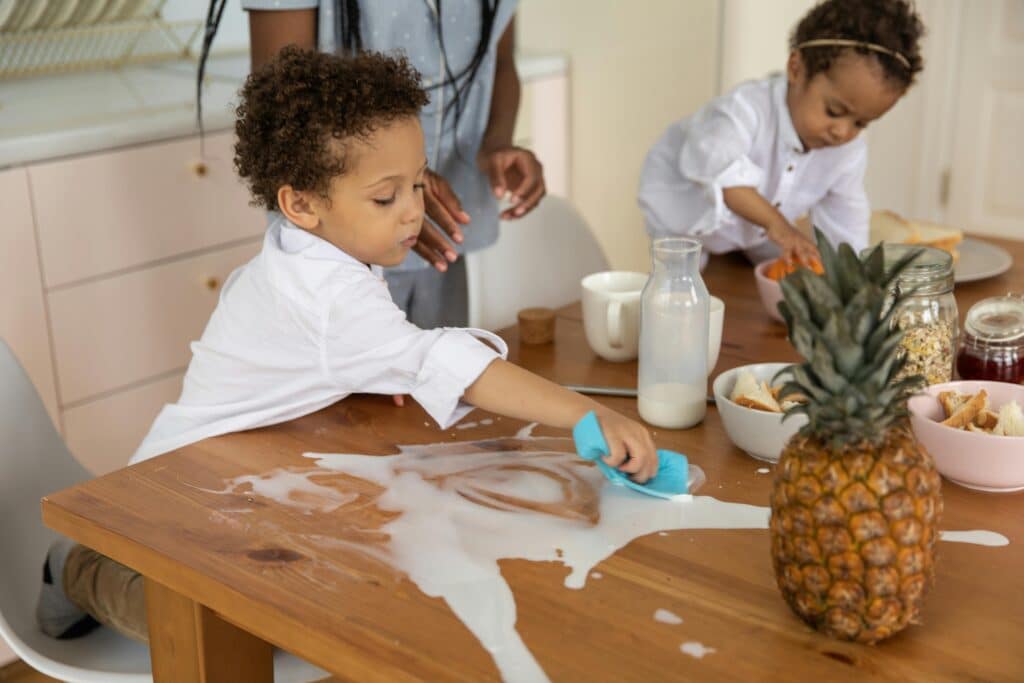
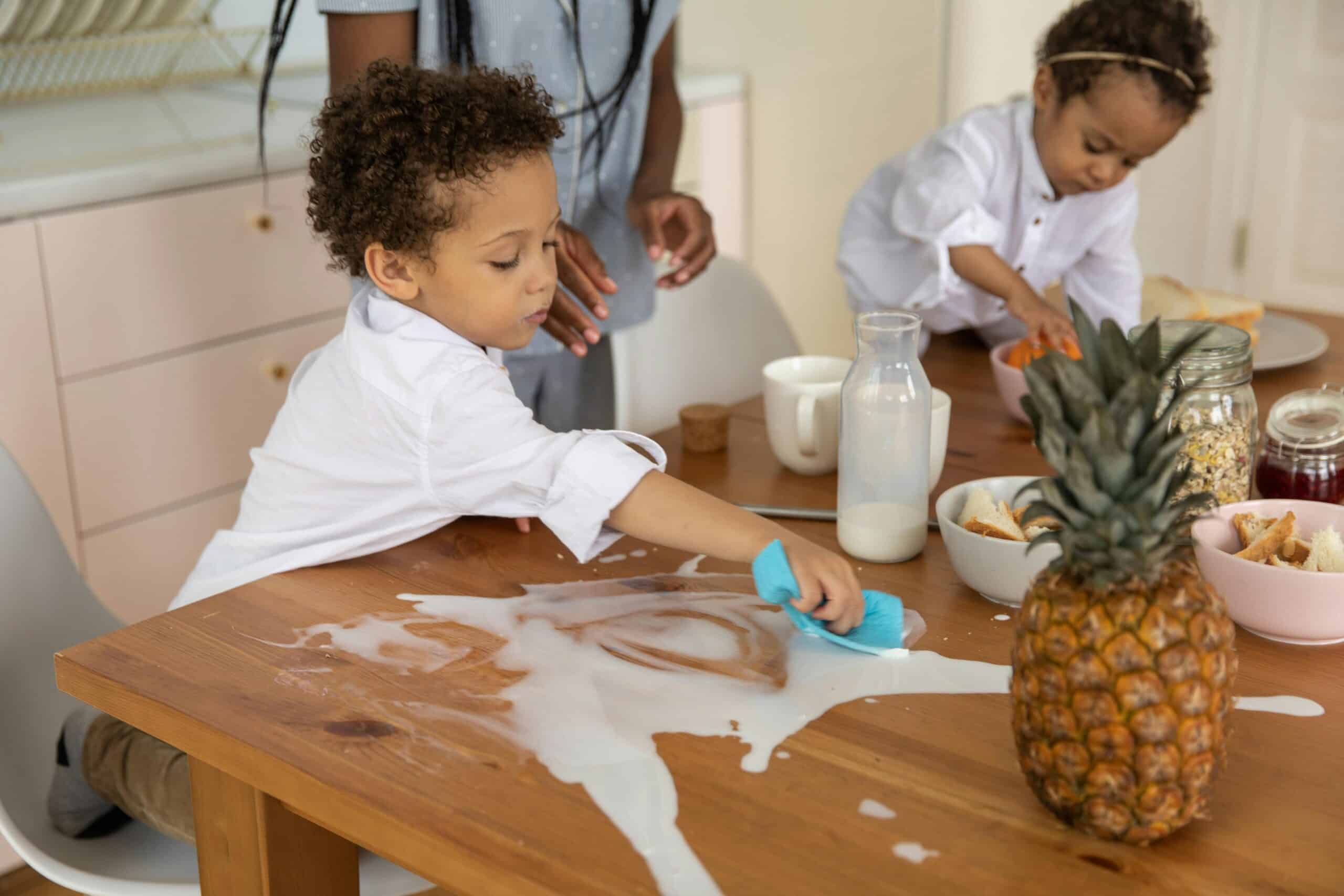
A glass tips over at the table. Milk spreads fast. Your child goes still. This is the part we often miss. That pause right after it happens. Before the tears. Before the apology. Before the scramble to fix it. In that split second, your child isn’t just reacting to the spill. They’re checking in. With their body. With the room. With you.
An instinctive response jumps in quickly. “Whoa—what happened?” Maybe followed by, “You’ve got to be more careful.” There’s no yelling. No punishment. But the energy shifts. The moment suddenly feels urgent. Heavy. Too big. Your child’s shoulders tighten, their breath catches, and now the spill isn’t just a spill. It’s overwhelming.
A different response starts with doing… nothing. Just for a beat.
You notice the mess. You feel the jolt in your own body. And instead of filling the silence, you wait. You let your child have a moment to register what happened and decide what they need next. Often, something surprising happens in that space. Your child looks at the milk. Maybe they reach for a napkin. Maybe they sigh. Maybe they say, “I didn’t mean to.”
Then you respond, calmly and simply. “Looks like some milk spilled. Let’s grab a towel.”
Same spill. Same mess. But the emotional wave never crests into a meltdown. The difference isn’t about being permissive or ignoring the problem. It’s about not rushing in with energy your child doesn’t actually need. That small pause gives their nervous system a chance to settle instead of escalate.
Real-Life Moments Where Reacting Less Changes Everything
Picture a morning where shoes are late, socks feel wrong, and everyone is already running behind. A reaction like “We don’t have time for this” sends your child into panic mode.
A regulated response like “I see this is frustrating. Let’s solve it together” doesn’t magically fix the socks, but it keeps their nervous system from spiraling.
Or think about homework frustration. A quick reaction to resistance can turn into a power struggle. Slowing down allows you to notice overwhelm instead of defiance.
These moments add up. Over time, your child learns what calm feels like because they’ve experienced it through you.
How Reacting Less Supports Emotional Regulation in Your Child
Highly sensitive children learn emotional regulation through modeling, not instruction.
You can explain coping skills all day long, but what they absorb is how you handle stress, mistakes, and unexpected moments in real time. They are watching what you do when things don’t go as planned, when you’re surprised, frustrated, or caught off guard.
When they see you pause, take a breath, and respond thoughtfully instead of reacting automatically, their nervous system registers that pause as information. It tells them that big feelings don’t require big reactions, and that discomfort can exist without turning into panic.
Over time, that repeated experience builds something internal. Their ability to pause before reacting grows, not because they were told to “calm down,” but because their body has learned what calm feels like. Not immediately. Not perfectly. But gradually, and in a way that actually sticks.
Simple Ways to Start Reining in Your Reactions
Start by noticing your triggers. Not to judge them, but to understand them. Spills, messes, tone, lateness, noise. Awareness alone creates space.
Practice narrating neutrally. Describe what you see without attaching emotion or urgency.
Give yourself permission to pause. Silence is allowed. You don’t owe an immediate response.
Regulate first, respond second. Even a two-second pause can change the entire tone of an interaction.
And when you do react, because you will, repair matters more than perfection.
FAQ
Does reacting less mean my child won’t learn consequences? No. Consequences can still exist. Reacting less simply means delivering them without emotional intensity that dysregulates your child’s nervous system.
What if my child’s reactions are still big even when I stay calm? That’s normal. Regulation is learned over time. Your calm doesn’t eliminate their feelings, but it gives them a safer space to process them.
Conclusion
Reacting less isn’t about being a perfect parent. It’s about becoming a steadier one.
For highly sensitive children, your regulated presence is one of the most powerful tools you have. It helps them feel safe, understood, and capable of navigating a world that often feels too loud.
And here’s the quiet benefit no one talks about enough. Reacting less helps you too. It lowers your stress. It keeps your body from living in constant alert mode. It creates more moments of connection and fewer moments you wish you could redo.
And every pause you choose is teaching your child something important. That big feelings can be met with calm. That mistakes aren’t emergencies. And that regulation is possible, even on the hard days.
fREE DOWNLOAD
Magic Scripts for Raising a Highly Sensitive Child
Transform challenging moments before they escalate with the Magic Scripts guide - your handbook for preventing meltdowns through the power of clear, calm communication.